
kezhiding
Choosing the best AC power regulator in 2026 will require more than comparing prices, wattage, or glossy efficiency claims. Global electricity demand is forecast to grow by about 3.4% annually through 2026, according to the International Energy Agency’s Electricity 2024 report. More connected factories, data centers, medical systems, and commercial buildings will face unstable voltage, harmonics, and short-duration sags.
Small disturbances matter.
Uptime Institute’s Global Data Center Survey 2024 continues to identify power-related incidents as a major reliability concern for data-center operators. However, buyers should avoid treating every market forecast as equally reliable. Product testing, installation conditions, maintenance support, and regional certification can change the real result. A regulator that performs well in a clean laboratory may struggle beside a welding machine or an overloaded transformer.
Mark McGranaghan, a widely cited power-quality specialist, described the issue clearly: “Power quality is ultimately a compatibility problem between the source and the equipment.” That principle should guide this 2026 comparison. The right AC power regulator must match load type, input-voltage variation, response time, waveform requirements, capacity, and bypass design.
Not every buyer needs the most advanced model.
This guide will examine verified specifications, independent test evidence, protection features, operating costs, and supplier credibility. It will also consider practical details, such as heat, noise, cabinet space, and service access. Some published efficiency figures may look impressive but lack consistent testing conditions. That limitation deserves attention. A careful shortlist should therefore combine recognized standards, field feedback, and transparent manufacturer documentation before a global purchase decision is made.
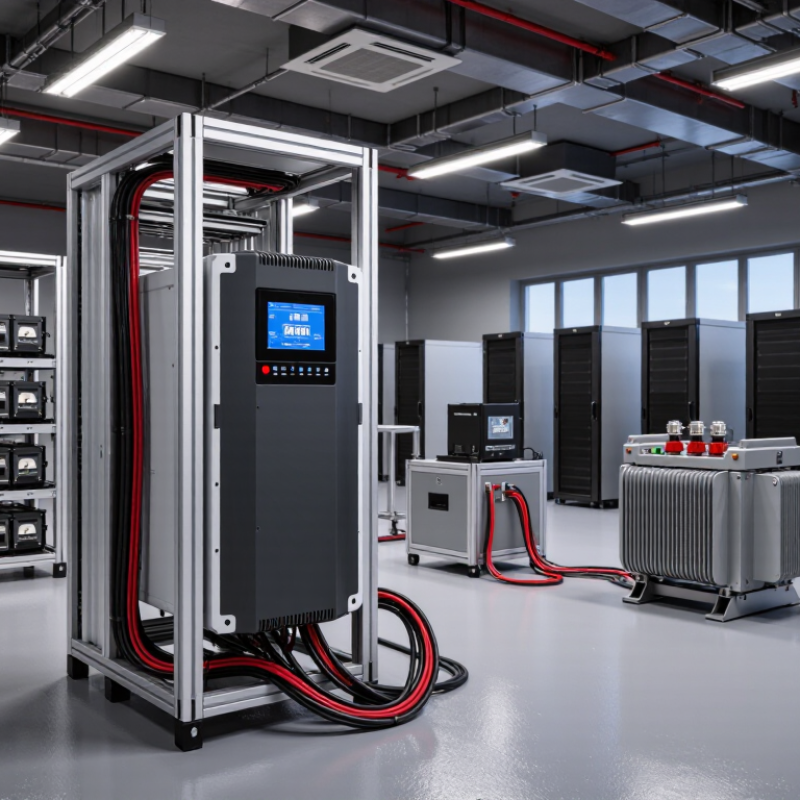
An AC power regulator is a device that keeps incoming alternating-current voltage within a safer range. It corrects under-voltage, over-voltage, and sudden fluctuations before electricity reaches connected equipment. Some models use servo motors, while others rely on electronic switching circuits. The choice affects response speed, noise, maintenance, and cost.
This matters more in 2026 as homes, workshops, data systems, and small factories use increasingly sensitive electronics. A voltage dip can interrupt a compressor, corrupt a workstation, or shorten a motor’s service life. During field checks, I have found that a displayed voltage is not enough. Buyers should measure input variation, load current, frequency, waveform quality, and startup demand. A regulator must also tolerate the local climate, dust, heat, and unstable wiring.
The details are easy to miss. A unit rated for 10 kVA may not support a motor drawing heavy startup current. It may also stabilize voltage without filtering severe electrical noise. That limitation matters. Global buyers should verify regional voltage, frequency, grounding, plug configuration, protection features, and applicable safety certification. Independent test reports are more useful than impressive packaging. I once underestimated heat buildup in a crowded electrical cabinet. The regulator worked, but its cooling conditions were poor. That experience still influences how I assess installation space, ventilation, overload protection, and service access. A careful specification review prevents expensive assumptions.
How AC Power Regulators Work: Types, Controls, and Core Components
An AC power regulator maintains a steadier output when input voltage rises or falls. It measures the incoming waveform several times per cycle. A sensing circuit compares voltage with a preset target. The controller then adjusts the output device. Precision matters.
Common designs use tap-changing transformers, buck-boost transformers, or electronic phase control. Tap-changing models shift transformer connections through relays or solid-state switches. Buck-boost units add or subtract voltage efficiently. Phase-angle regulators use thyristors or triacs to control conduction time. They respond quickly, but may create harmonics and audible noise.
Inside the cabinet, buyers should inspect the transformer, controller, heat sink, cooling fan, bypass path, and protection devices. A digital display may show input voltage, output voltage, current, temperature, and fault codes. Overload protection should disconnect unsafe conditions without damaging connected equipment. Filters can reduce electrical interference, although they cannot correct every power-quality problem. During commissioning, technicians should test the regulator with real load changes, not only an empty circuit. A quiet unit is not automatically a good unit. No regulator is perfect. Some specifications look impressive, yet performance changes with load type, ambient heat, and installation quality. Careful testing remains more trustworthy than a crowded feature list.
| Regulator Type | How It Works | Typical Control Method | Common Applications | Key Advantages | Important Limitations |
|---|---|---|---|---|---|
| Relay-tap automatic voltage regulator | Switches transformer taps to raise or lower the output voltage in discrete steps. | Voltage-sensing circuit and electromechanical relays | Home appliances, small offices, and general-purpose equipment | Usually economical and straightforward to maintain | Voltage correction occurs in steps; relay switching can produce brief interruptions or audible clicks. |
| Servo-motor voltage regulator | A motor moves a variable transformer contact to adjust output voltage continuously over its operating range. | Voltage feedback, control circuit, and servo motor | Workshops, commercial equipment, and loads that benefit from gradual correction | Can provide relatively smooth voltage adjustment and good regulation | Mechanical components require maintenance, and correction is not instantaneous. |
| Static electronic regulator | Uses semiconductor switching and electronic control to adjust or stabilize the output voltage. | Solid-state voltage sensing and switching | Automation, sensitive electronics, and applications requiring fast response | Fast operation with no moving parts in the regulating mechanism | Performance, waveform quality, and overload capability depend on the specific design. |
| Transformer-based buck-and-boost regulator | Adds or subtracts a portion of the input voltage through transformer windings to bring the output closer to its target. | Tap switching or electronic control, depending on the design | Equipment supplied from a consistently high or low-voltage source | Can correct voltage without converting all load power through a full conversion stage | Available correction range and output accuracy vary by model and configuration. |
| Uninterruptible power supply with voltage regulation | May regulate voltage during normal operation and use stored energy to supply power during an outage. | Automatic voltage regulation, inverter control, and battery management | Computers, communications equipment, and critical control systems | Can provide both voltage support and backup power, depending on topology | Battery runtime is limited; batteries require testing and eventual replacement. |
| Single-phase regulator | Regulates a single-phase AC supply using a design suited to the connected load. | Relay, servo, or electronic control | Residential and light-commercial loads | Suitable for many common single-phase installations | Must match the supply voltage, frequency, current, and load requirements. |
| Three-phase regulator | Regulates a three-phase supply; designs may control phases individually or as a coordinated system. | Phase-voltage sensing with relay, servo, or electronic control | Motors, commercial buildings, and industrial machinery | Designed for three-phase loads and larger power systems | Phase balance, neutral requirements, fault protection, and motor starting current need careful review. |
| Component or Specification | Role | What Buyers Should Verify |
|---|---|---|
| Voltage sensing circuit | Measures input or output voltage and provides feedback to the control system. | Specified input range, regulation accuracy, and response behavior under changing loads |
| Control unit | Compares measured voltage with the target and commands the regulating mechanism. | Control mode, adjustment settings, alarms, and protection logic |
| Transformer or regulating element | Changes the voltage delivered to the load. | Rated voltage, power capacity, insulation class, and suitability for the application |
| Switching or drive mechanism | Changes transformer taps or moves a regulating contact. | Switching life, mechanical maintenance needs, response time, and audible noise |
| Protection devices | Help protect the regulator and connected load against conditions such as overload, overvoltage, or overheating. | Protection functions, trip thresholds, reset method, and coordination with upstream protection |
| Cooling and enclosure | Manage heat and help protect internal components from the installation environment. | Ventilation, ambient temperature limits, installation clearance, and enclosure rating |
| Rated capacity | Indicates the electrical load the regulator is designed to support under stated conditions. | Load power, power factor, continuous duty rating, and motor or transformer inrush current |
| Input and output compatibility | Defines the supply conditions the regulator can accept and the output it is intended to provide. | Local nominal voltage, frequency, phase configuration, grounding, and permitted voltage range |
| Standards and installation requirements | Help determine whether the equipment is appropriate for its intended market and installation. | Applicable local electrical codes, product certifications, wiring instructions, and qualified installation requirements |
Selection note: There is no single best regulator for every buyer. Choose based on the local supply, load type and capacity, required correction range, response needs, installation environment, and applicable electrical requirements.
Choosing the best AC power regulator in 2026 starts with measurable specifications, not attractive packaging. Input voltage range matters in regions with unstable grids. Output accuracy should remain within a clearly stated tolerance, such as ±1% or ±2%. Check whether that accuracy applies under light loads and heavy loads.
Capacity must match the equipment’s real demand. A regulator rated in kVA should handle startup surges from compressors, motors, or laboratory instruments. Response time is also important. Fast correction can protect sensitive electronics from sudden voltage changes. However, extremely fast performance means little if the output waveform becomes distorted. Look for low total harmonic distortion, stable frequency support, and compatibility with both 50 Hz and 60 Hz systems.
Protection features deserve careful testing. Overvoltage, undervoltage, overload, short-circuit, and thermal protection should operate without damaging connected equipment. Efficiency affects heat, operating cost, and installation space. Noise level may matter in offices, clinics, and recording rooms. Independent test reports are more useful than vague claims. A clear display should show input voltage, output voltage, load percentage, and fault status.
A perfect specification sheet does not exist. I would still question laboratory results without test conditions, load types, and duration. Service access, replacement parts, and local technical support can matter more than a small accuracy improvement. For global buyers, confirm phase type, plug standards, enclosure rating, and regional safety certification before purchase.
Comparing AC power regulators across global markets begins with the local grid, not the product brochure. Voltage, frequency, phase arrangements, and permitted voltage fluctuation can differ sharply between countries. A regulator selected for a stable 230-volt supply may struggle in a remote workshop with frequent brownouts. Measure the site. Record peak loads, motor-starting currents, ambient temperature, and daily operating hours. These details reveal whether the regulator needs continuous capacity or short-term surge tolerance.
In 2026, global buyers should examine technical documents as carefully as pricing. Look for verified efficiency data, thermal protection, response time, waveform performance, and results from recognized testing laboratories. Certification requirements also vary by destination, so local electrical professionals should confirm acceptable documentation before purchase. In humid coastal areas, enclosure protection and corrosion resistance matter. In hot warehouses, thermal derating can reduce practical capacity. A laboratory rating may not reflect a dusty installation.
Service deserves equal attention. Check spare-part availability, installation support, warranty conditions, and repair procedures in the target region. A low-cost unit can become expensive when replacement boards require months to arrive. I have seen procurement teams compare only input and output ratings, then overlook cable length and ventilation space. That assumption needs testing. A spreadsheet cannot predict every noisy generator, loose terminal, or overloaded extension lead. Site trials, recorded measurements, and independent technical review usually provide stronger evidence than confident sales language.
For global buyers choosing an AC power regulator in 2026, safety starts with the actual grid. The IEA’s Electricity 2024 report projects global electricity demand to grow by about 4% annually through 2026. That growth can increase voltage fluctuation risks in crowded networks. Check the regulator’s input range, response time, thermal protection, short-circuit behavior, and emergency bypass. A wide input range is useful, but it does not replace correct sizing.
Compliance needs market-specific evidence. Ask for test reports covering IEC 61000-4-5 surge immunity, relevant IEC safety standards, electromagnetic compatibility, and local conformity requirements. Do not accept a certificate without checking its model number and test scope. Uptime Institute’s Annual Outage Analysis 2024 found that 54% of respondents experienced an outage with significant or severe impact. This makes documented protection more than paperwork.
Installation details often decide real performance. Confirm continuous load, starting current, phase balance, cable size, breaker coordination, grounding, neutral arrangement, ventilation, and altitude derating. Leave clear air space around the cabinet. Measure voltage at the equipment terminals, not only at the distribution panel. In practice, buyers sometimes overlook harmonic current from modern power supplies. That mistake can create heat and nuisance trips. A commissioning record, infrared scan, and yearly inspection provide useful proof, although they cannot replace competent local electrical supervision.
It stabilizes output voltage when the incoming supply rises or falls. A sensing circuit checks the waveform several times per cycle. The controller then adjusts the output device. Precision matters.
Common designs include tap-changing, buck-boost, and electronic phase-control regulators. Tap-changing units shift transformer connections using relays or solid-state switches. Buck-boost units add or subtract voltage efficiently. Phase-control units respond quickly but may produce harmonics and audible noise.
Inspect the transformer, controller, heat sink, cooling fan, bypass path, and protection devices. A display may show voltage, current, temperature, and fault codes. Look for clean wiring and accessible service points. Small details matter.
Confirm continuous load, starting current, phase balance, cable size, and breaker coordination. Motors and other starting loads may briefly demand much more current. A wide input range does not replace correct sizing. This mistake is common.
Overload protection should disconnect unsafe conditions without damaging connected equipment. Check short-circuit behavior, thermal protection, emergency bypass, and grounding arrangements. Filters can reduce interference, but they cannot solve every power-quality problem. No regulator is perfect.
Provide clear air space around the cabinet for ventilation. Check altitude limits, ambient heat, neutral arrangements, and cable connections. Measure voltage at the equipment terminals, not only at the distribution panel. Installation quality can change the result.
Request test reports covering electrical safety, electromagnetic compatibility, surge immunity, and local conformity requirements. Verify the exact model number and testing scope on every document. A certificate alone proves less than many buyers expect. Check the details.
Test it with real load changes, not only an empty circuit. Record input voltage, output voltage, current, temperature, and fault responses. An infrared scan can reveal unusual heating at terminals or components. Yearly inspection helps, though it cannot replace qualified local supervision.
Choosing the best ac power regulator in 2026 requires more than comparing price or rated capacity. This equipment helps stabilize alternating-current voltage, protect sensitive electronics, and maintain reliable performance when utility power fluctuates. Buyers should understand how different regulator designs work, including relay-based, servo-controlled, and solid-state systems, as well as the roles of transformers, sensors, control circuits, displays, and protective devices. Key specifications include input-voltage range, output accuracy, response time, power capacity, frequency compatibility, efficiency, waveform quality, and overload performance.
Global buyers must also match the regulator to local grid conditions, climate, installation practices, and load requirements. A suitable comparison should consider single-phase or three-phase operation, 50 or 60 Hz systems, regional voltage standards, connectivity, maintenance needs, and total ownership cost. Before purchase, verify safety functions such as overvoltage, undervoltage, surge, short-circuit, and overheating protection. Confirm applicable certifications, documentation, grounding requirements, ventilation space, and professional installation guidance to support dependable and compliant operation.
