 kezhiding
kezhiding
kezhiding
The 2026 Best AC Regulated Power Supply for Global Buyers guide begins with a practical question: what does “best” mean in a real laboratory?
For one buyer, it means 0.01% voltage regulation. For another, it means clean sine-wave output, low harmonic distortion, remote control, and dependable cooling during continuous testing. A supply may look impressive on paper, yet produce unstable readings when a motor starts or a transformer load changes. That detail is easy to overlook.
The International Energy Agency’s Electricity 2024 report forecasts global electricity demand to grow by about 3.3% annually from 2024 through 2026. This expansion increases pressure on manufacturers, laboratories, and service teams to validate equipment under controlled voltage conditions. Industry analyses from MarketsandMarkets and Grand View Research also indicate continued growth in power-management and power-electronics equipment, although market definitions differ between reports. That difference deserves caution.
Robert W. Erickson, a leading power-electronics authority, states: “Power electronics is the application of solid-state electronics for the control and conversion of electrical energy.” His definition explains why an ac regulated power supply is more than a simple voltage source. It must control energy accurately, respond quickly, and protect connected equipment.
This guide compares output stability, waveform quality, protection functions, interface options, efficiency, and after-sales support. It also considers 110 V, 220 V, and 230 V applications. Small details matter.
No ranking is perfect. Regional service networks, certification requirements, and actual load behavior can change the final choice. Global buyers should verify technical documents, test results, and local support before purchasing.
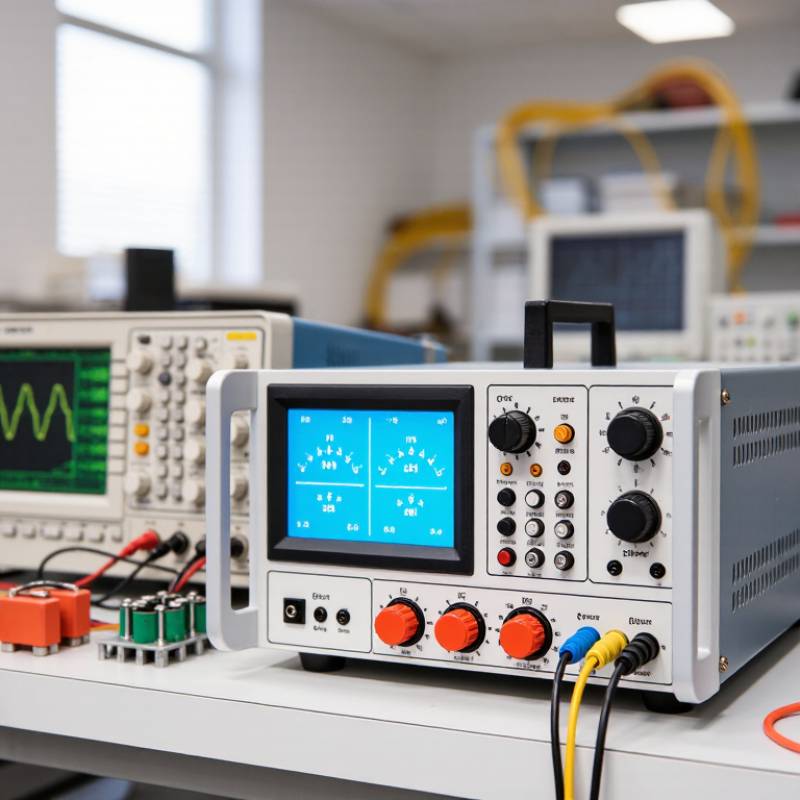
An AC regulated power supply is a device that delivers stable alternating voltage despite input or load changes. It is used in laboratories, production lines, testing rooms, and sensitive equipment installations. Unlike ordinary transformers, it actively monitors output conditions. This distinction matters when equipment requires consistent voltage and predictable performance.
Its operating principle is based on feedback control. Incoming AC first passes through protection and voltage adjustment stages. A sensing circuit measures the output several times each cycle or at selected intervals. The controller compares this measurement with the target value. It then adjusts a transformer tap, switching element, or power conversion stage. When the input falls, the system compensates. When the load suddenly increases, it reacts to reduce voltage deviation.
A practical unit should specify output accuracy, response time, frequency compatibility, load capacity, and waveform quality. For example, a test instrument may need a clean 230 V output while a motor load creates short current surges. Heat, cable resistance, and poor grounding can still affect results. No regulator is perfect. Feedback can react too slowly, and heavy loads may expose limits that appear harmless on a datasheet. I have found that checking voltage under both light and full load gives a more honest assessment. Measuring only an idle outlet can create false confidence. Safety features, isolation, overload protection, and thermal monitoring also deserve close attention during selection and commissioning.
It keeps alternating voltage near a set level despite input changes or shifting loads. It monitors its output and makes corrections. Not perfectly, though.
A sensing circuit measures output voltage and compares it with the target. A controller then adjusts a transformer tap or conversion stage. Response time varies.
Compare its rated VA and watts with your equipment’s needs. A motor may draw brief current surges. Check capacity under full load, not just at idle.
Sensitive instruments may need steady voltage, while sudden load changes can cause brief deviations. Ask how accuracy is specified. Warm-up and load limits matter.
Match the supply to the local system. Many regions use 230 V and 50 Hz; North America commonly uses 120 V and 60 Hz. Japan often uses 100 V.
Long cables, weak grounding, heat, and electrical noise can affect results. A wide input range helps, but it does not solve every problem. Check the actual site.
Ask for reports covering voltage dips, interruptions, accuracy, distortion, and transient response. Confirm test durations and load conditions. Claims without details are hard to compare.
Review isolation, overload protection, and thermal monitoring. Check plug fit and grounding before commissioning. I still find grounding easy to overlook.
An AC regulated power supply maintains a steady alternating-current output despite changes in input voltage or connected load. It typically uses sensing, control, and voltage-adjustment circuits to monitor output and correct fluctuations. Important specifications include input and output voltage ranges, frequency, rated power, regulation accuracy, waveform quality, response time, and protection features. Together, these determine how reliably the equipment can provide consistent power under different operating conditions.
AC regulated power supplies support applications in manufacturing, laboratories, communications, healthcare, and other industries where voltage stability matters. Global buyers should check regional voltage and frequency requirements, plug and connection types, grounding, and applicable safety and electromagnetic-compatibility standards. In 2026, selection should begin with the actual load and operating environment, then compare capacity, accuracy, efficiency, protections, and installation needs. Choosing an ac regulated power supply that fits both technical demands and local compatibility requirements can help protect connected equipment and support dependable operation.
